

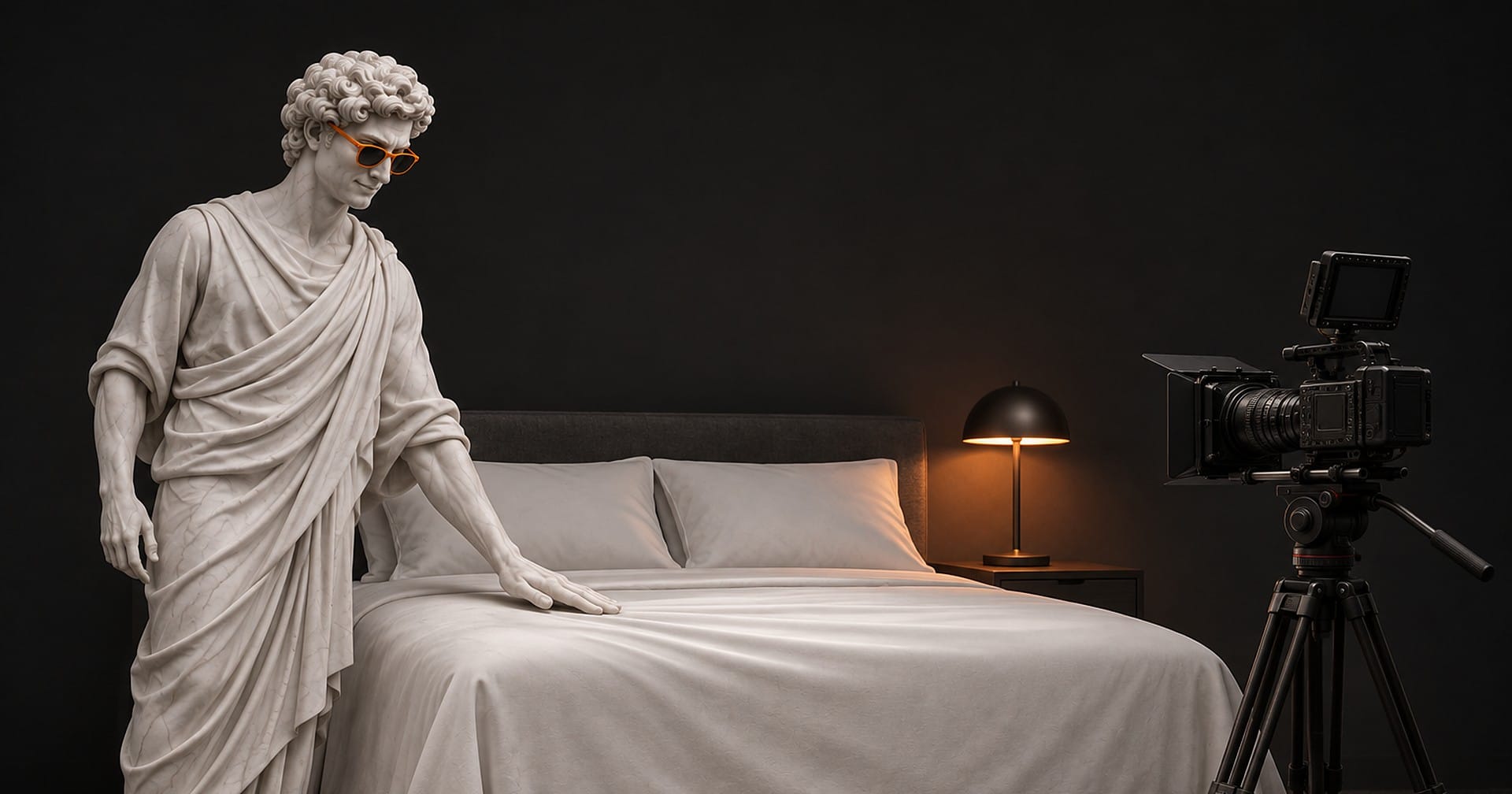
A video shoot is a short window of time, and everything you do before it decides how much that window delivers. This guide shows how to prepare a hotel for a video shoot so the people filming spend their hours capturing footage, not waiting for rooms to be cleaned or doors to be unlocked. It works whether your own team records the footage or an on-site media team does. If you are still working out what the shoot itself should cost, start with our guide to what sets the price of a hotel video, then come back here.
The good news is that preparation is mostly small, practical work. You do not need to redecorate or renovate. You need a plan, a clear schedule and a team that knows what is happening on the day.
Start with the goal of the video
Before anything gets cleaned or moved, decide what the video is for. A homepage film, a set of Reels and a room walkthrough for your booking page all need different shots. Write one sentence: “I need a video that makes [this guest] want to [do this].” Share it with whoever is filming and with your own team.
This one sentence shapes every later decision. It tells you which rooms matter most, which times of day to film and which parts of the property can stay out of frame. It also gives your staff a simple answer when someone asks why someone is filming the lobby for three hours.
Choose the right dates and time of day
Light is the most important ingredient in a hotel video. Ask whoever is filming when the sun hits your best spaces. A pool and terrace often look best in the morning or around golden hour. A restaurant interior may look better in the evening, with candles and warm lamps. Rooms with big windows can be filmed in the middle of the day, when natural light fills them evenly.
Next, check your occupancy calendar. If you can, pick days when the rooms you want to film are empty. A mid-week stretch in a quiet season is often easier than a weekend. Also plan a backup day for outdoor shots in case the weather turns. A team that has planned for rain protects you from paying twice.
How to prepare a hotel for a video shoot: the 48-hour checklist
The last two days before filming starts are where most of the work happens. Use this list as a starting point and adjust it to your property.
Two days before
- Confirm the shot list and the schedule with whoever is filming in writing.
- Block the rooms you plan to film, so they are not sold or assigned to guests.
- Tell your team who is on site on the day, and who can make decisions quickly.
- Check anything that needs repair: a flickering lamp, a scuffed wall, a loose tile, a dripping tap. Cameras show what the eye skips.
- Arrange parking and loading access for whoever is filming and their equipment.
One day before
- Deep clean the rooms and spaces on the shot list, including windows, mirrors and glass. Glass reflects the camera and the lights, so it needs to be spotless.
- Style the rooms the way a guest would want to find them: fresh linens, plumped pillows, towels folded, curtains hanging evenly.
- Remove clutter, signs, cables, trash cans and personal items from view.
- Test the lights, the air conditioning and the television. Turn on every lamp, because you will want the option on the day.
- Charge any devices you will ask staff to use, and print the schedule for your front desk.
Morning of the shoot
- Do a walk-through with the person leading the shoot before the first shot.
- Check the fresh details: flowers, fruit, coffee, a clean pool surface, a made bed.
- Give your team a short briefing: where filming will happen, which areas to avoid and who to call with questions.
Style the spaces guests care about most
A guest watching your video is asking one question: “What will my stay feel like?” The answer comes from details. A bed with crisp linens. A window with a view. A breakfast table with real food on it. A lobby that feels warm, not empty.
Walk each room with a fresh eye, standing in the doorway where the camera will probably stand. Remove anything that pulls attention from the best part of the room. Then add one or two things that add life: a plant, a tray with drinks, a book on a chair. Keep it simple. Over-styled rooms look staged, and guests notice.
Exteriors need the same care. Sweep the entrance, clear the pool area, move the sun loungers into neat lines and check that the signs and planters are in good shape. If your property has a view, make sure nothing blocks it: parked vans, stacked chairs or bins.
Plan for people, privacy and permissions
Guests, staff and local rules all need thought before the cameras roll. If you want people in the video, decide who they will be. Staff members who are comfortable on camera, or hired talent, are the usual choices. Each person who appears should sign a release that lets you use their image.
If guests will be on property, tell them in advance. A short note at check-in, or a sign at the entrance of a filming area, avoids awkward moments. Some teams film in quiet corners and keep guests out of frame, which also keeps the experience calm for people who are paying to relax.
If you plan to use a drone, ask whoever is filming about local rules. Flying near people, roads or protected areas often needs a license or permission, and that takes time to arrange. Music also has its own licensing rules, so ask who handles those and whether the license covers paid ads.
Brief your team so the day runs smoothly
The shoot depends on your staff as much as on whoever holds the camera. Choose one person as the main contact. This person knows the schedule, can unlock doors, can move guests or rooms if needed and can decide on the spot when something changes.
Share the schedule with housekeeping, front desk, maintenance and the kitchen. Each department should know when filming will reach its area and what it needs to have ready. A five-minute meeting the day before often prevents an hour of delay on the day.
Also decide what your team can and cannot do during the shoot. Operations come first. If a guest needs something, filming can pause, and the schedule can adjust. A good plan allows for that.
What the film team should plan before the shoot
Preparation is shared work. You get the property ready, and whoever is filming gets the plan ready. Before the day, expect a clear shot list, a schedule by location, a list of equipment and people, and a plan for weather and delays. Footage can be recorded by your own team or by a media team near your property, and your editing partner can coordinate with them on the creative direction. You should also know what you will receive at the end: how many videos, which lengths and formats, and how many revision rounds are included.
If you are also planning a new site around the video, our website redesign checklist can help you line up the page that will host it. A good film needs a page that converts, and it is easier to plan both together.
Common mistakes that cost shoot time
- Filming rooms that are still occupied. Guests leave belongings, and moving them takes time.
- Skipping the repair list. A small issue on camera can mean a reshoot or extra editing.
- No single decision maker. If the film team has to wait for permission at every door, the day shrinks.
- Too many locations in one day. It is better to film fewer places well than to rush everything.
- Forgetting the details outside. Entrance, pool, signs and parking show up in the first and last seconds of many films.
After the shoot: what happens next
Once filming wraps, the footage goes into post-production. This is where the edit, the color, the sound and the formats come together. Ask your editing partner for a timeline, and for a first cut that you can review with a clear list of notes. Good notes are specific: “the pool shot is too long” is more useful than “it feels off.” You can read more about why clear deliverables matter in why we shifted to productized services.
When the video is ready, use it everywhere it can work: your homepage, your booking page, your social channels and your ads. One well-prepared shoot gives you material for months, and the preparation you did on the property pays off in every format.
Next step
If you are planning a hotel video and want to know what to plan before filming starts, start with our hotel video production page. It explains how we edit and deliver hotel video, and how we coordinate with your team or a media team near your property. It also includes a free hotel video content planner to help you plan your content.